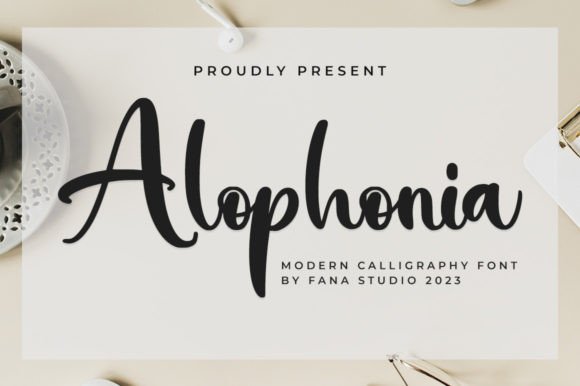
Alophonia Font: Elegant Script for Creative Projects
There I was, staring at a blank brand board, trying to find the right visual voice for a new boutique skincare line. The client wanted something that felt personal, authentic, and modern—like the kind of font you’d see on a handwritten note from a friend. That’s when I reached for Alophonia, a script handwritten font that promised just that: a personal touch with an elegant, classy, and modern look.
Alophonia for Brand Identity and Logo Design
Alophonia is one of those fonts that feels like it was made for logo design. Its flowing curves and soft transitions give it a sense of movement and warmth, which makes it perfect for brands looking to convey authenticity and craftsmanship. I tested it on a logo draft for a small, artisanal skincare brand, and it immediately brought a sense of refinement without being too formal. It’s not the kind of font that screams “luxury,” but it whispers it with confidence.
When paired with a simple serif or sans serif typeface, Alophonia can act as a strong accent in a brand’s typography system. It works best as a display font or headline font, where its personality can shine. But even in smaller sizes, like on a business card or packaging label, it maintains its elegance and readability.
Alophonia for Packaging and Product Labels
I used Alophonia on a packaging mockup for a handmade soap line, and it really elevated the overall aesthetic. The font’s organic feel matched the natural ingredients of the product, creating a cohesive visual language. On a product label, it added a handcrafted quality that resonated with the target audience. It didn’t feel too stylized or gimmicky, which is a common pitfall with many script fonts.
One thing to note is that Alophonia may not be ideal for long text blocks or small print. If you’re using it on a product description or ingredient list, it might become hard to read. But for short phrases, headings, or taglines, it’s a winner. It also works well in combination with a more neutral typeface to balance out the design.
Alophonia for Web Design and Social Media Graphics
In web design, Alophonia shines as a header font. I tried it on a website hero section for a creative studio, and it added a nice contrast against a clean sans serif body text. It brought a sense of creativity and approachability that aligned with the brand’s identity. On social media layouts, especially Instagram posts or Facebook banners, it worked well as a title or caption font, adding a touch of sophistication without overwhelming the design.
For digital assets, Alophonia is available in multiple file formats, including OpenType and WOFF, making it easy to integrate into web projects. It also includes alternates and ligatures, which are useful for customizing the look of your text. However, if you're planning to use it in a large-scale digital campaign, make sure to check the licensing terms first—some fonts have restrictions on web use.
Alophonia for Business Cards and Print Materials
Business cards are a great place to test how a font performs in real-world applications. I used Alophonia on a card for a local café, and it looked great in both color and black-and-white. The font’s subtle variations gave it a unique character that stood out from more generic script fonts. It wasn’t too flashy, which is important for professional settings.
On printed materials like flyers or posters, Alophonia adds a human element that can make a design feel more personal. It’s especially effective when used in combination with a bold, modern typeface. The contrast between the two styles creates visual interest while maintaining clarity and legibility.
Alophonia for Editorial and Commercial Design Assets
For editorial design, Alophonia can be a powerful tool for creating a narrative. I used it in a magazine layout for a lifestyle section, and it helped set a tone of elegance and refinement. It worked well as a subheading or pull quote, adding a layer of sophistication without distracting from the main content.
Commercial design projects, like signage or promotional materials, also benefit from Alophonia’s versatility. It’s a good choice for shop signs, event invitations, or branded merchandise. However, as with any script font, it’s important to test it in different sizes and contexts before finalizing the design. Sometimes what looks great on a screen doesn’t translate well to print.